Marcellus Shale
| This article is part of the FrackSwarm coverage of fracking. | |
| Sub-articles: | |
| Related articles: | |
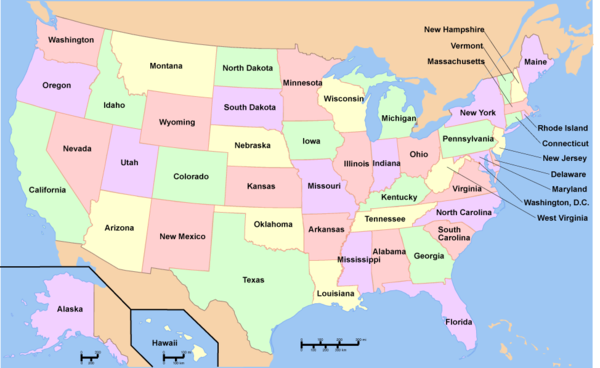
Marcellus Shale is an extensive formation of shale (a type of sedimentary rock that is high in carbon) in New York, Pennsylvania, Ohio, West Virginia, and other states in the region. [1] It underlies about 18,700 square miles in southern New York, including New York City's entire 1,585-square-mile watershed west of the Hudson River.[2] This shale has received renewed attention both because of new estimates of the quantity of methane gas believed to be under these rocks[3] and because of the significant environmental concerns that have been raised about the method of extracting the gas from the shale, "hydrofracking," which is discussed in more detail below.
Natural gas production in the Marcellus Shale exceeded 15 billion cubic feet per day (Bcf/d) through July 2014, and produces 40% of all natural gas in the country as of 2014.[4]
Data released by DrillingInfo in late 2015 reported that permits issued for the Marcellus region was 68 in October, down from 76 in September 2015. Additionally, there were 160 permits issued in June 2015. At the same period in 2010, during the fracking boom in the region, 600 permits were issued a month. The steady decrease in global oil prices was said to be resonsible for the decline in the number of fracking permits.[5]
Contents
- 1 NY Regulations
- 2 August 2011 United States Geological Survey Estimate
- 3 Concerns about Human Health and the Environment
- 3.1 Concerns about the New York City Water Supply
- 3.2 New Jersey State Senate Passes Fracking Ban
- 3.3 New York: First a Moratorium, then Gov. Andrew Cuomo Opens Floodgates
- 3.4 Pittsburgh Opts Out
- 3.5 Barium and Wastewater
- 3.6 Hazards Identified Around the U.S.
- 3.7 Pennsylvania
- 3.8 Louisiana
- 3.9 Texas
- 3.10 Wyoming
- 4 Enforcement Problems
- 4.1 The "Halliburton loophole"
- 4.1.1 Attempts to Close the Loophole with the FRAC Act
- 4.1.2 The Methane Industry's Counter-Move, the "Fast Track Shale Act" and Other Proposals
- 4.1.3 Other Related Congressional Action
- 4.1.4 Wyoming Successfully Approves New Rules Requiring Fracking Fluid Disclosure
- 4.1.5 Study on Wastewater in Pennsylvania
- 4.2 Industry PR, Groups, and other Information
- 4.3 Estimated Size of Methane Gas in the Marcellus Shale Region
- 4.4 Methane Gas Industry and Lobbying Expenditures
- 4.5 Marcellus Shale and Carbon Capture
- 4.6 PA Department of Homeland Security collecting and distributing information on drilling protestors
- 4.7 Advocacy Groups Working to Protect Health and the Environment
- 4.8 Leading Media Groups Tracking Marcellus Shale Issues
- 4.9 Industry groups and companies promoting the exploitation of the Marcellus Shale deposits
- 4.10 Industry Companies and Groups Opposing Stonger Environmental Protections
- 4.11 Articles and Resources
- 4.12 External resources
- 4.13 External Articles
- 4.1 The "Halliburton loophole"
NY Regulations
New York is presently (2011) the only state which has not allowed the process of slick water, high volume, horizontal hydraulic fracturing along long laterals in low-permeability shale formations. Although the new regulations seem to be on a fast track towards passage, despite many flaws.
See also
- SGEIS Quick-Start Guide: SGEIS_(NY)
- Compilation of expert commentaries on the flaws with the present document: 2011_SGEIS_Flaws(NY)
August 2011 United States Geological Survey Estimate
On August 23, 2011, the United States Geological Survey (USGS) disseminated a new estimate of the amount of procurable methane gas existing in the Marcellus Shale, which was vastly more in volume than the USGS' previous 2002 estimate. Titled "USGS Releases New Assessment of Gas Resources in the Marcellus Shale, Appalachian Basin," the press release states, "The Marcellus Shale contains about 84 trillion cubic feet of undiscovered, technically recoverable natural gas and 3.4 billion barrels of undiscovered, technically recoverable natural gas liquids according to a new assessment by the U. S. Geological Survey (USGS). These gas estimates are significantly more than the last USGS assessment of the Marcellus Shale in the Appalachian Basin in 2002, which estimated a mean of about 2 trillion cubic feet of gas (TCF) and 0.01 billion barrels of natural gas liquids."[6]
Water usage
In 2013 it was estimated that Marcellus Shale's 6,000 wells used nearly 5 million gallons of fresh water each.[7]
Concerns about Human Health and the Environment
The method for extracting gas from the Marcellus Shale--a process called "horizontal hydraulic fracturing," or hydrofracking, in which a fluid is injected into the rock which then releases the gas along with radioactive toxins and other hazardous substances in the shale--has raised serious environmental and health concerns.[8] In New Mexico, for example, similar processes have leached toxic chemicals into the water table at 800 sites.[9] To force natural gas out of shale, millions of gallons of fresh, drinkable water are forced through a pipe drilled into the shale at extremely high pressure. A variety of chemicals are added to the water to keep the fractures in the shale open and keep the gas flowing to the surface.[10]
Pro Publica has provided two charts, depicting how the "hydro-fracking" (also called hydrofracking or fracking) process works. "What is Hydraulic Fracturing?" can be seen at: http://www.propublica.org/special/hydraulic-fracturing-national and "Anatomy of a Gas Well can be seen at: http://www.propublica.org/feature/anatomy-of-a-gas-well-426. Although no complete list of the cocktail of chemicals used in this process exists, information obtained from environmental clean-up sites demonstrates that known toxins are routinely being used, including hydrochloric acid, diesel fuel (which contains benzene, toluene, and xylene) as well as formaldehyde, polyacrylimides, arsenic, and chromates.[11][12] These chemicals include known carcinogens and other hazardous substances.[13]
Pro Publica reporter Abrahm Lustgarten revealed that as much as 85% of the fluids used during fracking is regularly left underground after wells are drilled in the Marcellus Shale. Translation: "[Over] three million gallons of chemically tainted wastewater could be left in the ground forever. Drilling companies say that chemical make up less than 1% of that fluid...[which] still amount[s] to 34,000 gallons in a typical well." The old school of thought was that only roughly 30% of the fluids stayed in the ground, which has proven false.[14] Toxics Targeting created a video in which they show what they have coined "ignitible water." The video can be seen at right. [15]
Another video of ignitible water can be seen here: http://vimeo.com/4680635
Concerns about the New York City Water Supply
Citizen groups have mobilized in New York to oppose hydrofracking. This opposition has deployed several tactics, including a class action lawsuit.[16] New videos have also been produced to educate the public about the dangers of fracking the Marcellus shale. In the video to the left, Manhattan Borough President Scott Stringer calls massive proposed drilling operations in the watershed that provides New York City with its drinking water is the "most alarming environmental news he has heard in a long time, and makes this the number one environmental crisis" they face in the city.
In response to these and other concerns, New York City urged the state to ban methane gas drilling in its watershed on Wednesday, December, 23, 2009. Steven Lawitts, the city's top environmental official, called fracking techniques "unacceptable threats to the unfiltered fresh water supply of nine million New Yorkers," putting the City at odds with the methane gas industry, which considers shale drilling completely safe. Marc LaVorgna, spokesman for NYC Mayor Michael Bloomberg stated, "Based on all the facts, the risks are too great and drilling simply cannot be permitted in the watershed."[17]
The New York Times noted that the New York State Department of Environmental Conservation, which was tasked with "going through a public review of its new rules on hydraulic fracturing," was looking into reports that "gas companies use at least 260 types of chemicals, many of them toxic, like benzene. These chemicals tend to remain in the ground once the fracturing has been completed, raising fears about long-term contamination."[18]
American Rivers, a Washington, D.C. advocacy group, announced on June 3, 2010, that hydrofracking poses a huge threat to the Delaware River, which is the drinking source for nearly 17 million people across New York, New Jersey, and Pennsylvania. In the America's Most Endangered Rivers Report: 2010 Edition report, the American Rivers advocacy group named the Delaware River the number one most at-risk river, due to the threat of extensive drilling into the Marcellus Shale.[19] Here is a great link to a Factsheet produced by the American Rivers Group on the threat faced to the Delaware River by drilling into the Marcellus Shale: http://www.americanrivers.org/assets/pdfs/mer-2010/upperdelaware_factsheet_2010.pdf
New Jersey State Senate Passes Fracking Ban
On June 29, 2011, the New Jersey state Senate, in a 33-1 vote, passed a fracking ban.[20] The vote was largely symbolic though, as New Jersey sits on but a tiny sliver of the Marcellus Shale play.[21]
New York: First a Moratorium, then Gov. Andrew Cuomo Opens Floodgates
From June 2010 through June 2011, New York had in place a de facto moratorium while its Department of Environmental Conservation (DEC) studied the impacts of methane gas drilling, as well as if there were any plausible way for fracking to occur in New York. On July 1, 2011, Cuomo lifted the moratorium, announcing that 85% of the state's land would be open for the procurement of methane gas. Cuomo's office still has to review the draft given to him by the DEC, mostly for legal issues, and then thereafter, a the topic must be open for public sessions for a 30-day period, which is often extended for 60 days. Thus, it could be months before the moratorium is actually officially lifted and the drillers move into town.[22]
Pittsburgh Opts Out
"Citing health and environmental concerns, the Pittsburgh, Pa., city council voted unanimously Tuesday to ban natural gas drilling within the city limits. It is the first such ban in a Pennsylvania city. The 9-0 vote received a standing ovation.
The Pittsburgh bill was drafted by the Community Environmental Legal Defense Fund, a nonprofit advocacy group.
"'Commercial extraction of natural gas in the urban environment of Pittsburgh poses significant threat to the health, safety and welfare of residents and neighborhoods within the city,'" the ordinance said. "'[Drilling] allows the deposition of toxins into the air, soil, water, environment and the bodies of residents.'"
Mayor Luke Ravenstahl, who has indicated he opposes the measure, has 10 days to review it before the ban goes into effect. If he vetoes the bill, six council votes would be needed to override him." From Propublica on Nov. 16, 2010.
You can read more about this here: http://www.propublica.org/article/pittsburgh-bans-natural-gas-drilling
Barium and Wastewater
Hydraulic fracturing's production of hazardous wastewater is assumed to be partly due to chemicals introduced into freshwater injected into a well when it mixes with saltly brine naturally present in the shale rock. Dartmouth University researchers studied samples from three drill sites from the Marcellus Shale in Pennsylvania and New York to determine the possible reactions between the rock and water that release barium, and other toxic metals, during fracking.
Dartmouth College's 2015 study, published in Applied Geochemistry, found barium in fracking wastewater finds chemically reacts between injected freshwater and the fractured shale. This could play a role in generating barium in hydraulic fracturing wastewater. Fracking takes place a mile below the surface. This is where chemical reactions occur between water and fractured rock at high temperature and pressure.
Dartmouth team found that a large amount of barium in the shale is tied to clay minerals. This barium is readily released into the injected water as the water becomes more saline over time.[23]
Hazards Identified Around the U.S.
Catskill Mountainkeeper has noted that "A number of these [hydrofracking] fluids qualify as hazardous materials and carcinogens, and are toxic enough to contaminate groundwater resources. There are cases in the U.S. where hydraulic fracturing is the suspected source of impaired or polluted drinking water. In Alabama, Colorado, New Mexico, Virginia, West Virginia and Wyoming, incidents have been recorded by people who have gas wells near their homes. They have reported changes in water quality or quantity following fracturing operations." [24]
Additionally, the new film by Josh Fox, Gasland documents the consequences of largely unregulated gas drilling across the U.S., as described in this video on the right:
Pennsylvania
In September 2009, an estimated 8,000 gallons of fracking fluid spilled into a creek near Dimock, Pennsylvania. The spill was blamed on "faulty pipe work" and resulted in a significant fish kill and other fish “swimming erratically,” according to Pennsylvania’s Department of Environmental Protection.[25] Dimock residents subsequently sued Cabot Oil & Gas Corp, claiming the company's natural-gas drilling ha[d] contaminated their water wells with toxic chemicals, caused sickness and reduced their property values. The complaint says residents have suffered neurological, gastrointestinal and dermatological symptoms from exposure to tainted water. They also say they have had blood test results consistent with exposure to heavy metals. The lawsuit accuses Cabot of negligence and says it has failed to restore residential water supplies disrupted by gas drilling.[26] Water contaminated by methane drilling operations like those in Dimock, Pennsylvania, "is often ten times more toxic than water produced from petroleum production, and can contain high concentrations of salts, acids, benzene, toluene, ethylbenzene, xylene, radioactive materials," and other chemicals.[27]
On November 9, 2009, Reuters reported that the owner of 480 acres of land in southwest Pennsylvania claimed Atlas Energy Inc. ruined his land with toxic chemicals used in or released there by hydraulic fracturing and he also claimed to find seven potentially carcinogenic chemicals above permissible levels set by the U.S. Environmental Protection Agency. He performed tests on his well water a year before drilling began and said the water conditions were "perfect." After the drilling began, water tests found arsenic at 2,600 times acceptable levels, benzene at 44 times above limits and naphthalene five times the federal standard. He has decided to sue Atlas Energy Inc for negligence and is seeking an injunction against further drilling, and unspecified financial damages. Jay Hammond, general counsel for Atlas, said Zimmermann's claims are "completely erroneous" and said Atlas will "vigorously" defend itself in court and declined further comment.[28]
On June 4, 2010, a western Pennsylvania natural-gas well owned by EOG Resources Inc. blew out, releasing over one million gallons of gas and drilling fluids before being contained about 16 hours later, as reported by the Wall Street Journal and WCAJTV in Pennsyvania.[29][30] Operators at this site were preparing to extract gas after through [hydrofracking]]. In a press release, the Pennsylvania Department of Environmental Protection stated that it would "aggressively investigate" the methane well blowout and that it would take the "appropriate enforcement action."[31] "As a result, the well released natural gas and flowback (fracturing) fluid onto the ground and 75 feet into the air," the Pennsylvania Department of Environmental Protection said in the press release.
EOG Resources is the new namesake for the company formerly known as Enron. Pennsylvania Governor Ed Rendell has stated that the incident should serve as an open for what could unfold in the future if proper regulation methods are not implemented with expedience.[32] More on this statement can be seen here: http://www.cnbc.com/id/15840232?play=1&video=1517214459
On Jan. 5, 2010, Pro Publica reported that Pennsylvania was dumping hundreds of millions of gallons of the wastewater utilized in extracting natural gas in the Marcellus Shale into streams across the state. They reported that "Pennsylvania was largely unprepared for the vast quantities of salty, chemically tainted wastewater produced by drilling operations...While the state Department of Environmental Protection called for the fluids to be sent through municipal treatment plants, those facilities are largely unable to remove the salts and minerals, also known as Total Dissolved Solids (TDS), from the waste...[R]esearchers still don't know whether high TDS levels are harmful to humans or wildlife. But the analysis found that some public water utilities had exceeded the federal limit for levels of cancer-causing trihalomethanes, which can form when chlorine in drinking-water treatment systems combines with bromide, which can be present in drilling waste."[33]
It was reported in July 2013 that Exxon Mobil subsidiary XTO Energy Inc., "signed a consent decree filed in U.S. Middle District Court in which it has agreed to pay a $100,000 Environmental Protection Agency civil penalty" for an llegal discharge of fluids from a Marcellus Shale natural gas well site in Lycoming County, Pennsylvania. The Texas company will also spend "spend $20 million to implement preventive measures and the required recycling and disposal of fluids from hydraulic fracturing and well operations."[34]
Louisiana
In the April 30, 2009 [Pro Publica]]'s Abrahm Lustgarten wrote about news he dug up from Louisiana's Shreveport Times. The story revealed that 16 cattle mysteriously and abruptly dropped dead in a "northwestern Louisiana field after apparently drinking from a mysterious fluid adjacent to a natural gas drilling rig, according to Louisiana's Department of Environmental Quality. At least one worker told the newspaper that the fluids . . . were used for . . . hydraulic fracturing.[35]
Texas
In late 2007, three families near Grandview, Texas noticed changes in their well water just after a natural gas well within a couple of hundred yards of their properties was hydraulically fractured. Within days, five goats and a llama had died. All three families noticed strong sulfur smells in their water, making it unusable. At first their water ran dry, and then the water returned with extremely high pressure, blowing out pipes. Showering caused skin irritation. The Railroad Commission of Texas acknowledged that testing of well water found toluene and other toxic contaminants.[36]
Wyoming
Reuters also reports that "the U.S. Environmental Protection Agency found 14 "contaminants of concern" in 11 private wells in the central Wyoming farming community of Pavillion, an area with about 250 gas wells.[37]

Enforcement Problems
With state budget limitations and shortfalls, oil and gas regulators are spread too thin to do their jobs, even with the minimal guidelines in place[38] In West Virginia, for example, for the state's 17 inspectors to visit West Virginia's 55,222 wells once a year, they would have to inspect nine wells a day, every day of the year, with no weekends off, nor any vacation days. While the number of new oil and gas wells being drilled in the 22 states each year has jumped 45 percent since 2004, most states have added only a few regulators.[39]
Texas has largest imbalance, with 273,660 wells and just 106 regulators to oversee them. In late 2007, a Texas state auditor's report found that nearly half of the state's wells hadn't been inspected in the five years between 2001 and 2006, when the data was collected. According to Pro Publica's analysis, the number of new wells drilled each year in Texas has jumped 75 percent since 2003. However, staffing increased just 5 percent during that period and enforcement actions increased only 6 percent.[40]
Maps and charts depicting this problem can be seen here: http://projects.propublica.org/gas-drilling-regulatory-staffing/
The "Halliburton loophole"
In 2005, at the urging of Vice President Dick Cheney, Congress created the so-called "Halliburton loophole" to clean water protections in federal law to prevent the U.S. Environmental Protection Agency from regulating this process, despite serious concerns that were raised about the chemicals used in the process and its demonstrated spoiling and contamination of drinking water. In 2001, Cheney's "energy task force" had touted the benefits of hydrofracking, while redacting references to human health hazards associated with hydrofracking. Halliburton, which was previously led by Cheney, reportedly earns $1.5 billion a year from its energy operations, which rely substantially on its hydrofracking business.)[41]
According to Pro Publica reporter Abrahm Lustgarten, the EPA under Christine Todd Whitman's tenure as Administrator engaged in secret negotiations with industry, while purportedly addressing drinking water issues related to "fracking."[42] In 2004, the EPA undertook a study on the issue and "the EPA, despite its scientific judgment that there was a potential risk to groundwater supplies, which their report clearly says, then went ahead and very surprisingly concluded that there was no risk to groundwater," Lustgarten noted in September 2009. "[P]art of my reporting found that throughout that process the EPA was closer than seemed comfortable with the industry. I filed FOIA requests for some documents and found conversations between Halliburton employees and the EPA researchers, essentially asking for an agreement from Halliburton in exchange for more lax enforcement. The EPA, in these documents, appeared to offer that and agree to that. And it doesn’t appear, by any means, to have been either a thorough or a very objective study." [43]
Attempts to Close the Loophole with the FRAC Act
In June 2009 Representatives Diana DeGette, DeGette, John Salazar and Maurice Hinchey and Senators Robert P. Casey Jr. and Chuck Schumer introduced the Fracking Responsibility and Awareness of Chemicals Act (FRAC ACT).[44] The act is aimed at closing the 'Halliburton loophole' and requiring the oil and gas industry to disclose the chemicals used in drilling projects.
It would amend "the Safe Drinking Water Act to: (1) repeal the exemption from restrictions on underground injection of fluids near drinking water sources granted to hydraulic fracturing operations under such Act; and (2) require oil and gas companies to disclose the chemicals used in hydraulic fracturing operations." The bill could go a long way in determining the future of the hydro-fracturing national gas excavation process in the United States.[45][46][47]
Misleadingly, in an e-mail to Pro Publica reporter Abrahm Lustgarten, Lee Fuller, vice president of government relations for the Independent Petroleum Association of America said the measures in the FRAC Act "run counter to the nation's energy goals -- increasing the supply of American oil and natural gas -- by making it too costly to produce. Statements that hydraulic fracturing is unregulated are simply not true. It's been regulated assiduously by the states for more than 50 years."[48]
Similarly, Richard Ranger, senior policy analyst at the American Petroleum Institute told Pro Publica in May, "We don't think the system is broke, so we question the value of trying to fix it with a federal solution. So proceed with caution if you are going to proceed with regulating this business because it could make a very significant difference in delivering a fuel that is fundamental to economic health."[49]
More of the same occurred during the Thursday, June 4, 2009 Subcommittee On Energy And Mineral Resources Oversight Hearing On "Unconventional Fuels, Part I: Shale Gas Potential." In the hearing, Lynn Helms, an executive of Chesapeake Energy and Director of the Department of Mineral Resources of the Industrial Commission of the State of North Dakota "told the committee that state regulations of hydraulic fracturing are sufficient and effective and insisted that the fracturing process and the chemicals it uses are safe."[50][51]
But, as Lustgarten notes: "a close reading of the law shows that the Safe Drinking Water Act already defers regulatory authority over oil and gas drilling to the states and that reversing the exemption in question would mainly provide a baseline for best practices and give the federal government authority to investigate contamination cases or disastrous accidents."[52]
Colorado Rep. Diana DeGette, a co-sponsor of the FRAC Act, along with Maurice Hinchey (D-NY) and Jared Polis (D-Co) said “I frankly think the oil and gas companies have been running a scare campaign. I don’t know if the oil and gas industry doesn’t understand the bill or if they are intentionally misrepresenting the bill.”[53]
At that same hearing, Rep. Dan Boren (D-OK) stated, "I am proud that I am supported by the oil and gas industry because they employ a lot of people in my state and I am going to stick up for them. I am sick and tired of a lot of folks in my own caucus coming after the largest employer in my state."[54]
In late October 2009, the House of Representatives agreed to include a statement in the Interior and Environment Appropriations bill and report for fiscal year 2010 urging the EPA to reassess the impact of fracking on water supplies. The report stated:
- "The conferees urge the EPA to carry out a study on the relationship between hydraulic fracturing and drinking water, using a credible approach that relies on the best available science, as well as independent sources of information. The conferees expect the study to be conducted through a transparent, peer-reviewed process that will ensure the validity and accuracy of the data. EPA shall consult with other federal agencies as well as appropriate state and interstate regulatory agencies in carrying out the study, and it should be prepared in accordance with EPA quality assurance principles."[55]
On March 18, 2010, the Environmental Protection Agency announced that it would lead a $1.9 million for this comprehensive, peer-reviewed study on the impacts hydrofracking would have on water quality and public health.[56] Despite the study, Rep. Diana DeGette (D-CO) has expressed that it is crucial to continue the push forward for the passing of the FRAC Act[57]
The Methane Industry's Counter-Move, the "Fast Track Shale Act" and Other Proposals
Proposed on March 31, 2009 by Rep. Michele Bachmann (R-MN), the methane industry-backed bill would "open Federal Bureau of Land Management and National Forest lands to leasing for exploration, development, and production of oil shale resources, and for other purposes."[58] In short, the bill calls for ignoring all of the environmental concerns raised with regards to the drilling and a strong push forward of natural gas drilling. And, it calls for expanded drilling in America's national parks.
Bachmann and Rep. Patrick McHenry (R-NC) also introduced the so-called "Emergency Energy Cut the Red Tape Now Act of 2009," essentially calling for the suspension of all environmental regulations relating to oil and gas drilling. The bill proposes "to terminate or provide for suspension of the application of Federal laws that restrict exploration, development, or production of oil, gas, or oil shale, to facilitate the construction of new crude oil refineries, and for other purposes."[59]
Other Related Congressional Action
On February 19, 2010, Rep. Henry Waxman (D-CA) and Rep. Edward Markey (D-MA) spearheaded an Energy and Commerce Committee investigation into fracking. They issued letters demanding additional information from corporations like Halliburton, among numerous others. They also sent a memo to Members of the Subcommittee on Energy and Environment detailing the background on the issue, including EPA's recent work on hydraulic fracturing, including the need for additional oversight and investigation.[60]
On May 13, 2010, Sen. Joe Lieberman (I-CT) and Sen. John Kerry (D-MA) unveiled what they called the "American Power Act," that called for the curtailment of greenhouse gas emissions at 17 percent below 2005 levels by 2020 and 83 percent by 2050.[61] Beyond that, the bill also would require oil and methane companies like Halliburton to divulge chemicals used in the hydraulic fracturing of natural gas wells, meaning they must be displayed publicly. This does not mean that the use of such chemicals would be banned; it would simply mean that the cocktail of chemicals used in drilling for methane no longer be deemed a "proprietary secret."[62]
Wyoming Successfully Approves New Rules Requiring Fracking Fluid Disclosure
On June 8, 2010, the Wyoming Oil and Gas Conservation Commission unanimously approved new fracking rules that require operators to disclose the “fracking” fluids injected into natural gas wells. According to the Wyoming Casper Star-Tribune, "Industry organizations and individual companies argued against the new rules claiming that the chemical mixtures used in fracking are proprietary. In response, the Wyoming Oil and Gas Conservation Commission included a measure that requires companies to disclose the information and requires state regulators not to share it with the public."[63]
Study on Wastewater in Pennsylvania
In a peer-reviewed study released in April 2013, it was reported that "Wastewater produced by hydraulic fracturing (“fracking”) for natural gas in the Marcellus Shale is already overwhelming disposal options and will continue to do so as gas development increases, according to newly published research. The investigation did not evaluate environmental consequences of the wastewater." However, it was also reported that "fracking wastewater could have a range of environmental and health impacts if not managed correctly. The analysis was limited to Pennsylvania, which along with West Virginia dominates Marcellus shale gas production today."[64]
Industry PR, Groups, and other Information
A new trade organization called the Marcellus Shale Coalition has been funded to fight back citizen opposition and persuade officials to allow drilling to continue without new regulations.
The coalition describes itself in this fashion: "Founded in 2008, the Marcellus Shale Coalition (MSC) is an organization committed to the responsible development of natural gas from the Marcellus Shale geological formation and the enhancement of the region’s economy that can be realized by this clean-burning energy source. The members of the coalition work with our partners across the region to address issues with regulators, local, county, state and federal government officials and communities about all aspects of producing clean-burning, job-creating natural gas from the Marcellus Shale."[65] The coalition consists of over 90 producers, non-profit members, and associate members, including the likes of Halliburton, United States Steel Corporation, American Petroleum Institute, and Chesapeake Energy Corporation. Like most big money-making ventures then, the hydrofracking movement has spread its wings far and wide. The headquarters of the Marcellus Shale Coalition is located in the heart of the Marcellus Shale region, in Canonsburg, PA.
The PickensPlan and National Security Claims
Tycoon T. Boone Pickens has launched an effort to use national security to press for expanded drilling for methane gas in the U.S., saying that "we need to stop relying on our enemies for gas."[66] In an attempt to break from his reputation as the man who swift-boated John Kerry from the White House, Pickens has marketed himself as a leader in "energy independence." He has coined a mantra for the methane drilling industry on Jim Kramer's CNBC show Mad Money on June 4, 2010 that "It's cleaner, it's cheaper, and it's ours."[67] (Kramer has also been a big advocate for investing money in stocks of companies of drilling for methane in the Marcellus Shale region on his show and website.)
In an a speech delivered on the economy at Carnegie Mellon University on June 2, 2010, President Barack Obama stated, "I understand that we can’t end our dependence on fossil fuels overnight. That’s why I supported a careful plan of offshore oil production as one part of our overall energy strategy. But we can pursue such production only if it’s safe, and only if it’s used as a short-term solution while we transition to a clean energy economy. And the time has come to aggressively accelerate that transition. The time has come, once and for all, for this nation to fully embrace a clean energy future . . . It means tapping into our natural gas reserves, and moving ahead with our plan to expand our nation’s fleet of nuclear power plants."[68]
Estimated Size of Methane Gas in the Marcellus Shale Region
Estimated Amount of Methane Associated with Marcellus Shale
Estimates of the size of the reserves range from 1.9 trillion cubic feet (TCF), by the U.S. Geological Survey in 2003,[69] to nearly 500 TCF (which would be the second largest natural gas reserve in the world),[70] by a college professor who has received numerous grants from the American Chemical Society's Petroleum Research Fund.[71]
Significant Purchases of Land
Ultra Petroleum Corporation Marcellus Shale Land Purchase
On Monday, Dec. 21, 2009, Ultra Petroleum Corporation announced it would acquire about 80,000 acres in the Marcellus Shale region for roughly $400 million, expanding its presence there to about 250,000 net acres, with potential for 1,800 drilling sites.[72]
Exxon-Mobil Land Purchase
On December 21, 2009, "Exxon Mobil finalized terms to buy XTO Energy for $31 billion, which included XTO’s rights to 47,000 acres of a lucrative section of the shale. The buyout of XTO Energy by Exxon Mobil could be off if Congress makes hydraulic fracturing illegal, according to language in the contract. The contract stipulates that the $31 billion deal could be terminated if Congress finds the practice unlawful. Rep. Ed Markey, D-Mass., chairman of the energy and environment subcommittee of the Energy and Commerce Committee, said that he plans hearings next year to examine industry practices, including "some of these unconventional extraction techniques." [73]
CONSOL Purchases Dominion Exploration and Production
On March 15, 2010, Dominion announced the sale of its Dominion Exploration and Production business to CONSOL Energy for $3.475 billion.[74] The sale is expected to close on April 30, 2010 and will include 193 employees currently working for Dominion. [74][75] CONSOL is looking for $4 billion to fund the purchase and further develop the operations; Bank of America, Merrill Lynch and PNC Bank have committed to providing financial assistance.[75]
According to CONSOL, Dominion Exploration and Production is known as “one of the oldest and most active drillers in Pennsylvania and West Virginia”.[75] The transaction includes 1.46 million acres for oil and gas drilling with over 9,000 already-producing wells.[75] This transaction includes 491,000 acres of land in the Marcellus shale formation of Pennsylvania and West Virginia, and almost triples the amount of land rights CONSOL owns in the Marcellus area.[74][75] CONSOL expects to extract more than 41 billions of cubic feet equvilent (Bcfe) in 2010.[75]According to CONSOL’s press release, this purchase will make the company the largest producer of natural gas in the Appalachian basin and give CONSOL “a leading position” in the Marcellus area.[75]
After the sale of Exploration and Production, Dominion will continue to focus on and expand its gas pipeline and storage businesses.[74] At the sale of Dominion Peoples (a Pennsylvania natural gas distribution company), Dominion CEO Thomas F. Farrell II stated, “We are not leaving Pennsylvania by any means. We are expanding our large natural gas transportation and storage system in the state to handle the influx of gas from the Marcellus Shale and other new sources.”[76]
Methane Gas Industry and Lobbying Expenditures
In June 2010, Common Cause of New York released a report titled "Deep Drilling, Deep Pockets: Expenditures of the Natural Gas Industry in New York to Influence Public Policy." The report demonstrated that as the gas and oil industry has begun pushing forward with its drilling campaign in the Marcellus Shale, so too has the magnitude of their lobbying expenses. In 2009, says the report, over $650,000 were spent on lobbying, while in the first four months of 2010, that amount has already nearly been surpassed, with two-thirds of the year still remaining. The report goes on to show that the most active lobbying efforts in New York were put forth by Exxon, Chesapeake Energy, and Cabot Oil and Gas. These companies have melded together as a collective trade association that goes by the name of Independent Oil and Gas Association, resembling Pennsylvania's Marcellus Shale Coalition.
Compared to the period between the years 2006 through 2009, a period during which lobbying expenditures totaled nearly $110,000, the expenditures jumped six-fold in 2009, totaling nearly $670,000. And, four months into 2010, that total is already about to be surpassed, as the push for drilling into the Marcellus Shale reaches new levels.[77]
Marcellus Shale and Carbon Capture
On August 17, 2010, Consol Energy VP Steve Winberg said that while the company is focused on producing natural gas from its 250,000 acres in the Marcellus Shale, it also sees the potential for making money from depleted reservoirs for carbon capture of coal plant emissions: “I think pore space is going to become a very valuable commodity if we move into a carbon constrained world." Carbon capture and sequestration (CCS) is a process where carbon dioxide is removed from fossil fuels and stored in underground geologic formations. Consol holds around 4.5 billion tons of coal reserves and more than 1.4 trillion cubic feet of natural gas reserves.[78]
Pennsylvania began seriously looking into CCS in 2008, as part of the requirements of Act 129, a much broader regulatory effort to reduce energy consumption and demand. A 2009 report by the Clinton Climate Initiative conducted for the Pennsylvania Department of Conservation and Natural Resources (DCNR) imagined an integrated CCS network in Pennsylvania, rather than many unaffiliated pilot projects. The report also notes that the Marcellus Shale, once depleted, "could become a potential storage site", particularly because companies have been acquiring land positions. Those positions could make it easier to arrange large CCS projects, although the leases that allow for mineral extraction don’t always automatically allow for injections as well.[78]
However, another DCNR report found that continued exploration and development of the Marcellus Shale “could potentially compromise the integrity of this formation as a viable cap rock in areas of natural gas production.” This is because the Marcellus Shale is developed through hydraulic fracturing, which literally cracks open underground rocks. Those cracks might make sections of the Marcellus Shale unsuitable for CCS, which requires formations to be completely sealed off to keep the carbon dioxide sequestered. That fracturing could also "jeopardize" other CCS sites: the Marcellus Shale, located between 5,000 and 8,000 feet underground, is the geologic “cap” that isolates an even deeper formation called the Oriskany Sandstone. Fractures in the Marcellus could threaten the isolation that makes the Oriskany a CCS candidate. Conventional oil and gas drilling could cause similar problems, the report noted. For that reason, it suggested designating certain areas for carbon dioxide injections, which could prove extremely difficult at a time when gas is a tradable commodity but carbon isn’t.[78]
Meanwhile, Pittsburgh City Councilman Doug Shields introduced a bill to ban gas development anywhere in the city limits. The city may not have the legal authority to enforce that ban, but Shields believes opposition to drilling could eventually lead to a change in state law.[78]
PA Department of Homeland Security collecting and distributing information on drilling protestors
In September 2010, Pennsylvania Gov. Ed Rendell admitted that information about municipal zoning hearings on Marcellus Shale natural gas drilling and a screening of the documentary "Gasland," as well as an anti-BP candlelight vigil and other peaceful gatherings, were the subject of anti-terrorism bulletins being distributed by Pennsylvania's homeland security office. Rendell admitted that distributing the information was tantamount to trampling on constitutional rights, as the bulletins were going to representatives of Pennsylvania's natural gas industry.[79]
Also included in the bulletins were other potential "anti-terrorism security" concerns that it said could involve "anarchists and Black Power radicals." Also listed were demonstrations by anti-war groups, deportation protesters in Philadelphia, mountaintop removal mining protesters in West Virginia, and an animal rights protest at a Montgomery County rodeo. Despite saying he regretted the actions, Rendell said he was not firing his homeland security director, James Powers, but that he was ordering an end to the $125,000 contract with the Philadelphia-based organization that supplied the information, the Institute of Terrorism Research and Response.[79]
Someone who received an Aug. 30 bulletin gave a copy to Virginia Cody, a retired Air Force officer who lives in Factoryville and is concerned about the rapid expansion of Marcellus Shale drilling in northeastern Pennsylvania. Cody gave the document to a friend, who posted it on an online forum largely read by drilling opponents in the area. After it was posted online, Powers sent Cody an e-mail saying that the bulletin was intended for owners, operators and security personnel associated with the state's "critical infrastructure and key resources." He closed by saying, "We want to continue providing this support to the Marcellus Shale Formation natural gas stakeholders while not feeding those groups fomenting dissent against those same companies."[79]
Advocacy Groups Working to Protect Health and the Environment
- Catskill Mountainkeeper [43]
- Catskill Citizens for Safe Energy [44]
- Clean Water Action [45]
- Delaware Riverkeeper [46]
- Hudson Riverkeeper [47]
- Earthjustice [48]
- Earthworks Oil and Gas Accountability Project [49]
- Natural Resources Defense Council [50]
- New York Residents Against Drilling [51]
- Pacific Institute [52]
- Shale Shock [53]
- Sierra Club's Atlantic Chapter [54]
- Trout Unlimited [55]
- Other local groups involved include Damascus Citizens for Sustainability [56]
Leading Media Groups Tracking Marcellus Shale Issues
Industry groups and companies promoting the exploitation of the Marcellus Shale deposits
- Allis-Chalmers Energy, Inc.
- Alpha Natural Resources
- AMEC
- Alta Resources, LLC
- Anadarko Petroleum Corporation
- AOP Clearwater
- Aquatech
- ARM Oil & Gas Solutions
- Atlas Energy Resources, LLC
- Babst Calland Clements & Zomnir
- Borton-Lawson
- Buchanan, Ingersoll & Rooney, PC
- Buchart Horn, Inc.
- Burnett Oil Company
- Cabot Oil and Gas Corp.
- Carrizo Oil & Gas, Inc.
- Chesapeake Energy Corporation
- Chief Oil and Gas LLC
- CNX Gas Corporation
- Columbia Gas Transmission
- Complete Production Services
- Crescent Directional Drilling, LP
- Cummings/Riter Consultants, Inc.
- Devon Energy Company
- Dominion Exploration & Production, Inc.
- EADS
- East Resources, Inc.
- Encana
- Energy Corporation of America
- Energy Transfer
- Enterplus Resources USA
- Environmental Resources Management, Inc.
- EOG Resources, Inc.
- EQT Production Company
- Epic Energy Resources
- EXCO- North Coast Energy, Inc.
- EXCO Resources
- Exterran Energy Solutions, L.P.
- Exxon Mobil
- Fluids Management
- Fortuna Energy Inc.
- Frac Tech Services, Ltd.
- GAI Consultants, Inc.
- Gas Technology Institute
- Halliburton
- Ground Water Protection Council
- J-W Operating Company
- Marathon Oil
- Marcellus Shale Coalition
- MarkWest Energy Partners, L.P.
- General Energy Company, LLC
- Hart Resource Technologies, Inc. & PA Brine Treatment, Inc.
- Hess, Inc.
- Holloman
- Hull & Associates, Inc.
- Hunt Oil Company
- Jackson Kelly, PLLC
- Jones Day
- J-W Operating Company
- K&L Gates
- Key Energy Services, Inc.
- L. Robert Kimball & Associates, Inc.
- Marathon Oil Company
- MarkWest Energy Partners, L.P.
- M-I Swaco
- Newfield Exploration Company
- New Tech Engineering
- Novus Operating, LLC
- Packers Plus
- Penn Virginia
- Pennsylvania General Energy Company, LLC
- Pennsylvania Independent Oil & gas Association
- Petroleum Development Corporation
- PDC Mountaineer, LLC
- Phillips Production Company
- Quest Resource Corporation
- Range Resources
- Reed Smith, LLP
- RETTEW
- Rex Energy Corporation
- Royal Dutch Shell
- Samson Resources Company
- Saul Ewing
- Schlumberger
- Select Energy Services, LLC
- Seneca Resources Corp.]]
- Southwestern Energy Company
- StatoilHydro
- Sunoco Logistics Partners LP
- Superior Well Services, Ltd.
- Talisman Energy USA, Inc.'
- TeraAqua Resource Management
- Tetra Tech
- Thorp, Reed and Armstrong
- Triana Energy
- Turm Oil, Inc.
- UGI Energy Services, Inc
- United States Steel Corporation
- Universal Well Services, Inc.
- URS Corporation
- Weatherford International Ltd.
- Weavertown
- Weston Solutions, Inc.
- Williams Production Company
- XTO Energy, Inc.
Industry Companies and Groups Opposing Stonger Environmental Protections
- American Exploration & Production Council
- American Petroleum Institute
- Colorado Oil & Gas Association
- Energy In Depth, a website funded by a coalition of industry groups
- Independent Petroleum Association of America
- Independent Petroleum Association of Mountain States
- Illinois Oil & Gas Association
- Independent Oil & Gas Association of New York
- Independent Oil and Gas Association of Pennsylvania
- Independent Oil & Gas Association of West Virginia
- International Association of Drilling Contractors
- Indiana Oil and Gas Association
- Kansas Independent Petroleum Industry
- Marcellus Shale Coalition
- Marcellus Shale Committee
- Michigan Oil And Gas Association
- New Mexico Oil & Gas Association
- Ohio Oil and Gas Association
- Oklahoma Independent Petroleum Association
- Permian Basin Petroleum Association
- Petroleum Equipment Suppliers Association
- Texas Alliance of Energy Producers
- Texas Independent Producers and Royalty Owners Association
- US Oil & Gas Association, Mississippi/Alabama Division
- Superior Well Services
Articles and Resources
References
- ↑ Catskill Mountainkeeper, "Marcellus Shale: The Marcellus Shale – America's next super giant", Catskill Mountainkeeper website, accessed March 2009.
- ↑ [1] "NYC says Catskill gas drilling risks are too great," Mary Esch, Associate Press, Dec. 23, 2009
- ↑ Mary Esch, "Estimated gas yield from Marcellus shale goes up", International Business Times, November 4, 2008. (This is an AP story). "Got gas, lots," Pittsburgh Tribune-Review, November 5, 2008.
- ↑ "Marcellus Region production continues growth" US Energy Information Administration, accessed August 5, 2014.
- ↑ "Gas Slump Hits America's Biggest Fracking Field" Reuters, December 2, 2015.
- ↑ "USGS Releases New Assessment of Gas Resources in the Marcellus Shale, Appalachian Basin." United States Geological Survey. USGS.Gov. August 23, 2011. Accessed August 23, 2011.
- ↑ "Marcellus Shale fracking wells use 5 million gallons of water apiece" John Upton, Grist, October 31, 2015.
- ↑ "What Is Hydraulic Fracturing?", Pro Publica, undated, accessed October 2009.
- ↑ Abrahm Lustgarten, "New York’s Gas Rush Poses Environmental Threat", Pro Publica, July 22, 2008.
- ↑ {http://www.adk.org/pdf/ADK_Comments_on_NYS_Energy_Plan.pdf, "Adirondack Mountain Club Comments on Governor David Paterson’s Draft 2009 Energy Plan,"], August 24, 2009.
- ↑ [2] "Q+A: Environmental fears over U.S. shale gas drilling," Reuters, Dec. 23, 2009.
- ↑ Weston Wilson, Letter to Senators Allard and Campbell and Representative DeGette, October 8, 2004. This letter, from a U.S. Environmental Protection Agency Employee, describes how the Bush Administration's EPA produced a scientifically unsupportable conclusion that hydrofracking should not be regulated under the Clean Water Drinking Act.
- ↑ "Gas Drilling Plan Raises Water Contamination Fears in New York City", Voice of America News, Carolyn Weaver, December 24, 2009
- ↑ [3], "New gas wells leave more chemicals in ground," Abrahm Lustgarten, Politico.com, December 27, 2009
- ↑ [4], "Ignitible Drinking Water From a Well in Candor, New York, Located Above the Marcellus Shale Formation."
- ↑ "Marcellus Shale Developments", Pocahantas County Fare Blog, March 9, 2009
- ↑ "NYC urges ban on shale gas drilling in watershed", Edith Honan, "Reuters" December 23, 2009].
- ↑ [5] "Dark Side of a Natural Gas Boom," Jad Mouawad and Clifford Krauss, New York Times, Dec. 8, 2009
- ↑ [6],"America's Most Endangered Rivers Report: 2010 Edition: #1 Upper Delaware River, Pennsylvania and New York Threat: Natural Gas Extraction."
- ↑ [7], "New Jersey Passes Fracking Ban." Linnitt, Carol. DeSmogBlog. June 29, 2011.
- ↑ [8] "Marcellus Shale - Appalachian Basin Natural Gas Play." Geology.com. Accessed June 30, 2011.
- ↑ [9], "New York Governor Andrew Cuomo Opens Fracking Floodgates." PR Watch. PRWatch.org. June 30, 2011.
- ↑ "Fracking plays active role in generating toxic metal wastewater, study finds," Science Daily, December 15, 2015.
- ↑ "The Marcellus Shale – America's next super giant" Catskill Mountainkeeper", 2009
- ↑ David O. Williams Fracking fluid kills fish in Pennsylvania stream, state enviro officials say Colorado Independent. September 22, 2009
- ↑ [10] "Pennsylvania residents sue over gas drilling," Jon Huddle, Reuters, Nov. 20, 2009.
- ↑ [11], "What the Frack? Poisoning our Water in the Name of Energy Profits," Peter Gleick, Pacific Institute, December 8, 2009
- ↑ [12] "Pennsylvania lawsuit says drilling polluted water," Jon Huddle, Reuters, Nov. 9, 2009.
- ↑ [13], "Blowout Occurs at Pennsylvania Gas Well." Wall Street Journal. June 4, 2010
- ↑ [14], "Gas Well Blowout Under Control In Clearfield County." June 4, 2010.
- ↑ [15], "DEP Plans Thorough Investigation in to Marcellus Shale Well Blowout in Clearfield County: EOG Resources Well Released Fracking Fluid, Natural Gas for 16 Hours." Pennsylvania Department of Environmental Protection. June 4, 2010.
- ↑ [16], "Rendell: Marcellus Shale Incidents 'A Warning.'" KDKA. June 10, 2010.
- ↑ [17], "Pennsylvania’s Drilling Wastewater Released to Streams, Some Unaccounted For." Kusnetz, Nicholas. ProPublica. Jan. 5, 2010.
- ↑ "Problems at Pa. gas well site to cost Texas company big dollars" John Beauge, The Patriot-News, July 19, 2013.
- ↑ [18], "16 Cattle Drop Dead Near Mysterious Fluid at Gas Drilling Site," Abrahm Lustgarten, Pro Publica, April 30, 2009
- ↑ "Congress Should Close the Halliburton Loophole Hydraulic fracturing should be regulated under the Safe Drinking Water Act", EarthsWorkAction.org
- ↑ [19] "Q+A: Environmental fears over U.S. shale gas drilling," Reuters, Dec. 23, 2009.
- ↑ "State Oil and Gas Regulators Are Spread Too Thin to Do Their Jobs", Abrahm Lustgarten, Pro Publica; December 30, 2009
- ↑ "State Oil and Gas Regulators Are Spread Too Thin to Do Their Jobs", Abrahm Lustgarten, Pro Publica; December 30, 2009
- ↑ [20], Abrahm Lustgarten, Pro Publica, December 30, 2009
- ↑ Tom Hamburger and Allen C. Miller, "Halliburton's Interests Assisted by the White House", Los Angeles Times, October 14, 2004.
- ↑ See http://www.democracynow.org/2009/9/3/fracking_and_the_environment_natural_gas.
- ↑ Interview with Abrahm Lustgarten, "Fracking and the Environment: Natural Gas Drilling, Hydraulic Fracturing and Water Contamination," Democracy Now!, September 3, 2009.
- ↑ "Senators, Representatives act to close Halliburton Loophole in the Safe Drinking Water Act", Media Release, June 9, 2009.
- ↑ [21]GovTrack.US, "Fracturing Responsibility and Awareness of Chemicals (FRAC) Act"
- ↑ [22], "House Version of the 'Frac Act'"]
- ↑ [23], "Senate Version of the 'Frac Act'"
- ↑ [24], "FRAC Act—Congress Introduces Twin Bills to Control Drilling and Protect Drinking Water," Pro Publica, Abrahm Lustgarten, June 9, 2009
- ↑ "Natural Gas Politics", Abraham Lustgarten, Pro Publica, May 26, 2009
- ↑ [25], "Industry Defends Federal Loophole for Drilling Before Packed Congressional Hearing," Abrahm Lustgarten, Pro Publica, June 5, 2009
- ↑ [26], "Testimony Submitted to the House Committee on Energy and Commerce, Subcommittee On Energy and Mineral Resources by Lynn D. Helms, Director of the Department of Mineral Resources of the Industrial Commission of the State of North Dakota," June 4, 2009.
- ↑ [27], "Industry Defends Federal Loophole for Drilling Before Packed Congressional Hearing," Abrahm Lustgarten, Pro Publica, June 5, 2009
- ↑ [28], "Industry Defends Federal Loophole for Drilling Before Packed Congressional Hearing," Abrahm Lustgarten, Pro Publica, June 5, 2009
- ↑ [29], "Industry Defends Federal Loophole for Drilling Before Packed Congressional Hearing," Abrahm Lustgarten, Pro Publica, June 5, 2009
- ↑ Congressman Maurice Hinchey, "Congress Gives Final Approval to Hinchey Provision Urging EPA to Conduct New Study on Risks Hydraulic Fracturing Poses to Drinking Water Supplies", Media Release, October 29, 2009.
- ↑ [30], "EPA Initiates Hydraulic Fracturing Study: Agency seeks input from Science Advisory Board." Environmental Protection Agency, March 18, 2010.
- ↑ [31], "EPA to study hydraulic fracturing, but calls for FRAC Act continue." Colorado Independent. March 18, 2010.
- ↑ [32], "H.R.1810 -- Fast Track Shale Act." March 31, 2009
- ↑ [33], "H.R.1813 -- Emergency Energy Cut the Red Tape Now Act of 2009." March 31, 2009.
- ↑ [34], Energy Commerce Committee Investigation on Potential Impacts of Hydrofracking; Feb. 19, 2010
- ↑ [35], Colorado Independent, "Sportsmen, Colorado conservationists question some aspects of climate bill." May 13, 2010.
- ↑ [36], "Kerry-Lieberman climate bill calls for disclosure of fracking chemicals." March 18, 2010.
- ↑ [37], "State approves 'fracking' regulations." June 8, 2010.
- ↑ "http://ehp.niehs.nih.gov/121-a117/ "Estimating Wastewater Impacts from Fracking" Charles W. Schmidt, Environmental Health Perspectives, April 2013.
- ↑ [38], "About the Marcellus Shale Coalition," Marcellus Shale Coalition.
- ↑ http://www.pickensplan.com/theplan/
- ↑ [39], "Boone Pickens: Get Ready for $400 Oil?." Mad Money, CNBC. June 4, 2010
- ↑ [40], "Remarks by the President on the Economy at Carnegie Mellon University." The White House. June 2, 2010.
- ↑ Robert C. Millici and others, Assessment of Undiscovered Oil and Gas Resources of the Appalachian Basin Province, U.S. Geological Survey, Fact Sheet 009-03, February 2003. (Pdf)
- ↑ David Rottman, "Natural Gas Changes the Energy Map", MIT Technology Review, Nov/Dec 2009.
- ↑ "Gary G. Lash", accessed October 2009. (This CV reports a $130,991 grant from the New York State Energy Research and Development Authority. The year of the grant is not stated but it was after June 2003.)
- ↑ Tess Stynes, "Ultra Petroleum Plans $500M Note Sale To Fund Debt, Shale Buy", Wall Street Journal, December 21, 2009.
- ↑ [41] "Local economies look for boost from natural gas exploration in region’s Marcellus shale," Adam Voster, Ocean Times Herald, December 22, 2009
- ↑ 74.0 74.1 74.2 74.3 “Dominion agrees to sell its Appalachian E&P business for $3.475 billion”, Dominion press release, March 15, 2010.
- ↑ 75.0 75.1 75.2 75.3 75.4 75.5 75.6 “CONSOL Energy to acquire Dominion’s Appalachian E&P business for $3.475 billion in cash”, CONSOL Energy press release, March 15, 2010.
- ↑ “Dominion closes on sale of Dominion Peoples for $780 million”, Dominion press release, February 1, 2010.
- ↑ [42], "Deep Drilling, Deep Pockets: Expenditures of the Natural Gas Industry in New York to Influence Public Policy - PART I: Lobbying Expenditures," Common Cause of New York. June 2010.
- ↑ 78.0 78.1 78.2 78.3 Eric Lidji, "Is Marcellus primed for CCS?" Greening of Oil, August 20, 2010.
- ↑ 79.0 79.1 79.2 Marc Levy, "`Appalled' Pa. gov. shuts down reports on protests" AP, Sep. 15, 2010.
External resources
- "The Daily Frack", a news aggregator on the top daily news related to frack in the Marcellus Shale
- Gasland the Movie, "Gasland the Movie Website"
- "Gasland the Movie Director and Producer Josh Fox on The Daily Show"
- NOW on PBS, "Gasland: Will the boom in natural gas drilling contaminate America's water supply?" Great interview with producer of the documentary called "Gasland" that will premiere on June 21 on HBO, talking about hydrofracking's impact on everyday Americans.
- Pro Publica, Buried Secrets: Gas Drilling's Environmental Threat. This is an archive of articles on environmental issues associated with the development of the Marcellus shale deposits.
- Lisa Sumi, Shale Gas: Focus on the Marcellus Shale, Oil & Gas Accountability Project/Earthworks, May 2008.
- Jeffrey Jacquet and Richard Stedman, Emerging Trends in the Marcellus Shale, Research & Policy Brief Series, Department of Development Sociology, Cornell University, Issue Number 30, July 2009.
- Environmental Impacts of Gas Well Drilling (blog), a New York State Water Resources Institute blog.
- CCE Gas Leasing and Exploration (blog) Cornell University Co-operative Extension. This blog has links to various reports and guides on gas extraction.
- "Marcellus Shale News", Shale.blog. (A blog which has a section aggregating news stories on Marcellus Shale issues).
- "Schema-Root.org: Marcellus Shale", current news about Marcellus Shale.
- "GRITtv: How 'Natural' Is Natural Gas?", a documentary about the harms caused by natural gas excavation in the marcellus shale regions of the United States.
- "Map: How Many Natural Gas Wells Does Your State Have?", map displaying each state to show how many producing gas wells there are in each respective state
- "A Reporter's Journey Through the Gas Fields", video showing the gas fields under which hydrofracking occurs
- "Faces of Dimrock", slideshow featuring pictures of those affected by the marcellus shale hydrofracking in Dimrock, PA
- Flyp: "Where Energy and Water Collide"
- Good Interview on NPR's "Fresh Air" with Pro Publica Investigative Reporter Abrahm Lustgarten, "Reporter: Documents Show Years of BP Neglect"
- "PA State Senator Lisa Baker on Marcellus Shale Gas Drilling"
- "Congressman Joe Sestak on Marcellus Shale Gas drilling"
- "Nadia Steinzor, Earthworks Marcellus Regional Manager on Marcellus Shale Gas Drilling"
- Here is an additional video describing the fracking fluids that might be of interest.
External Articles
- ""Best of ProPublica's Natural Gas Reporting"
- "Oscar Nominee Josh Fox Speaks Out About Oil Lobby's Efforts to Crush His Film" Kors, Joshua. Huffington Post. Jan. 27, 2011.
- Have Public Servants Charged with Protecting Drinking Water for 15 Million People Sold Out to the Gas Drilling Industry? ." Eisenberg, Nora. Alternet. Jan. 23, 2011.
- "Salazar vows to ‘fully consider’ Capitol Hill input on gas ‘fracking’ rule," Geman, Ben. The Hill. Jan. 14, 2011.
- "Letter from Ken Salazar on Natural Gas Drilling." The Hill. Jan. 10, 2011.
- Nicholas Kusnetz, "Regulation and Disclosure of Fracking at the Center of Gas Drilling Debate", ProPublica. Dec. 29, 2010.
- Sasha Chavkin, "Executive Order Suspending Fracking Brings Little Change", ProPublica. Dec. 17, 2010.
- Congressman Maurice Hinchey, "Congress Gives Final Approval to Hinchey Provision Urging EPA to Conduct New Study on Risks Hydraulic Fracturing Poses to Drinking Water Supplies", Media Release, October 29, 2009.
- Anya Litvak, "Investors upbeat about Marcellus Shale at Appalachian Gas Conference", Pittsburgh Business Times, October 29, 2009.
- "Editorial: Shale game", The Philadelphia Inquirer, November 2, 2009.
- "The F Word: Will Gas Drilling Destroy NYC’s Drinking Water?", Firedoglake, October 5, 2009
Click on the map below for state-by-state information on fracking: